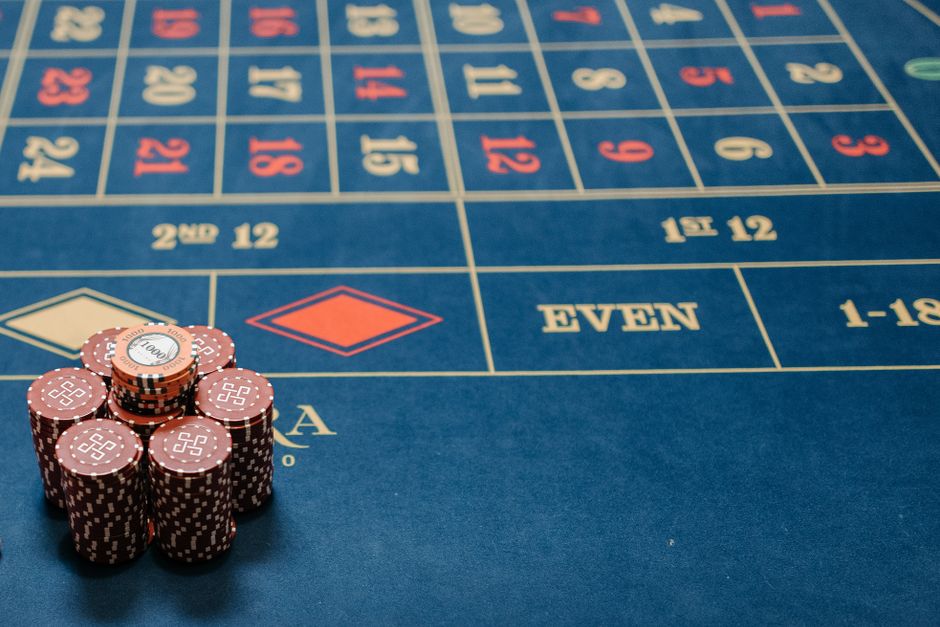
You sit down at two different slots with the same $100 bankroll. On one, you grind for two hours, slowly bleeding down to $40 but never really threatening a big score. On the other, you're broke in eleven minutes flat—but somewhere in that blur, you hit a 140x bonus that put you briefly ahead. Same bankroll, same bet size, radically different experience. That's not bad luck or a rigged machine. That's volatility, and understanding it is probably the single most useful thing a modern player can learn.
Most casual players talk about RTP (return to player) as if it's the whole story. It isn't. RTP tells you what a game pays back over millions of spins. Volatility tells you how it pays it back—and that's the number that actually shapes your session.
Volatility (sometimes called variance) describes the distribution of a slot's payouts. A low-volatility game pays small amounts frequently. A high-volatility game pays rarely but, when it does, the amounts can be enormous. Neither is "better." They're just different shapes of the same math.
Concrete example: two slots, both with 96% RTP. Game A might pay something on 1 in 3 spins, with a max win of 500x. Game B might pay on 1 in 9 spins, with a max win of 50,000x. Over a million spins, both return roughly the same percentage. Over your 200 spins on a Tuesday night, they feel like completely different hobbies.
Where this gets interesting is how operators and developers label it. You'll see terms like:
Those labels are useful, but they're also marketing. A slot marketed as "high volatility" might have a 15,000x max win and a hit frequency of 18%. Another with the same label might hit 11% of the time. The label is a vibe; the math is in the paytable and the studio's published stats.
Here's where most players get themselves into trouble. They pick a slot based on the theme, the graphics, or a streamer's highlight reel—then bet a fixed amount relative to their total bankroll, regardless of the game's variance.
A rough rule that experienced players use: your bankroll should be at least 100–200 times your bet for high-volatility slots, and 40–80 times for low-volatility ones. If you're spinning at $1 on a 50,000x max-win Megaways title with a $50 bankroll, you're not playing a game—you're buying a lottery ticket that expires in 50 spins.
The flip side is just as real. Grinding a low-volatility slot with a bankroll sized for high volatility means you'll sit there for hours, barely moving, wondering when the fun starts. Neither approach is wrong. They just need to be matched to what you actually want from the session.
If the answers don't line up, drop your bet size—not your standards. Bet sizing is the one variable you fully control. Take a look at mahjong way 1 for a fuller picture.
The same concept shows up across iGaming, and recognizing it will change how you approach every game.
In blackjack, basic strategy has relatively low variance—your edge (if any) plays out slowly. Card counting, by contrast, is high variance: you'll have long stretches of losing before the math swings your way. In poker, a tournament is far more volatile than a cash game. The same player can final-table a $50 tournament one week and bust in the first level the next, and both results are entirely within expectation. Cash games, especially at low stakes, smooth that curve way down.
Sports betting follows the same logic. A -110 moneyline bet on a favorite is low volatility—you win a little, you lose a little. A 10-leg parlay paying 50-to-1 is the opposite: it's a high-variance slot machine wearing a sportsbook's clothes. Both are valid ways to bet. Only one of them is likely to leave you with a bankroll at the end of the month if you're not honest about the variance.
Even live dealer games and crash-style games fit the model. Crash is essentially pure volatility packaged as a skill game—you're choosing when to cash out, which is really a bet on how much variance you can stomach.
Once you internalize this, a few practical habits follow naturally.
One more thing worth saying plainly: volatility is not a strategy. You cannot "beat" it, and no bet-sizing trick changes the house edge embedded in RTP. What you can do is stop being surprised by it. That's the entire win.
Most players spend their time hunting for the "best" slot, the "best" bet, the "best" game. In practice, the sharper move is understanding that every game is a different shape of risk, and your job as a player is to pick the shape that fits your bankroll, your patience, and your evening. Volatility isn't the enemy. Mismatched volatility is. Get that one thing right, and iGaming stops feeling random and starts feeling like something you're actually steering.

You've been grinding the same online slot for forty minutes. Three scatter symbols away from a bonus that never...

Gable and dormer loft conversions add space in different ways — here's how they compare on headroom, cost, planning...

A practical guide to measuring rise and run on a gable roof, converting them into degrees, and choosing a pitch that...

Exploring gables, roofs and architectural design..
